
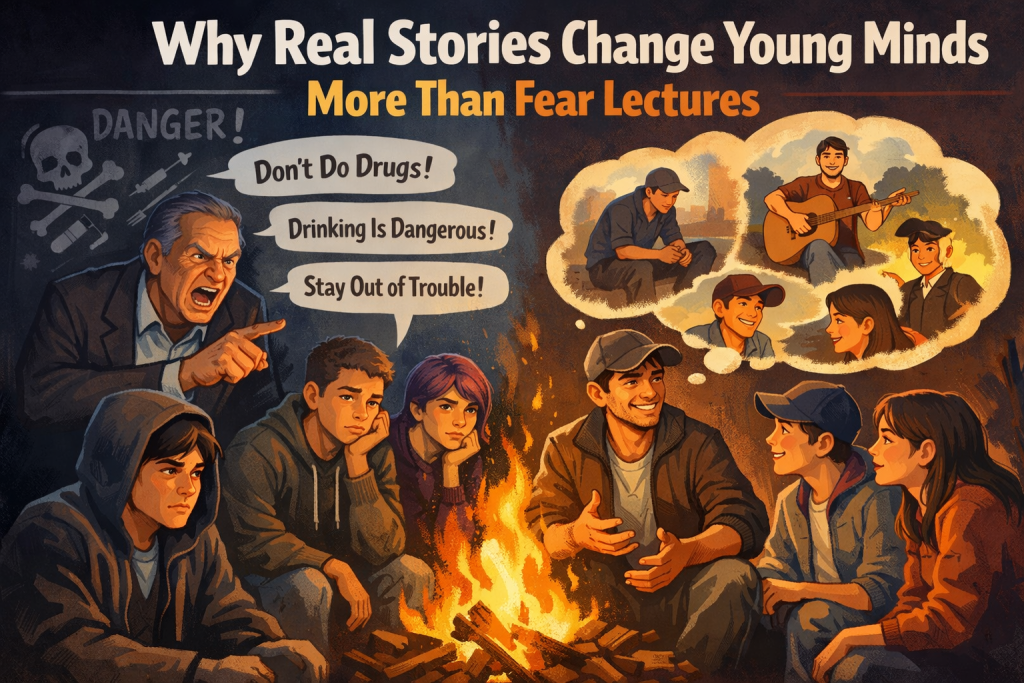
For years, adults have tried to keep young people out of trouble using warnings, threats, and fear-based lectures. “Don’t do this.” “You’ll end up in jail.” “Your life will be ruined.” While those messages are true, they often fail — because they don’t feel real to the listener.
Stories work where lectures fail.
Prevention stories — like those in Wake Up Stories — place the reader inside the moment of consequence. Instead of being told what might happen, readers emotionally experience what does happen.
They sit in the courtroom.
They ride the prison bus.
They feel the first night in a cell.
They watch a mother cry.
They live the regret.
This emotional immersion creates reflection — and reflection creates behavior change.
Research in youth intervention consistently shows that narrative-based learning has stronger impact than rule-based instruction. When a young reader recognizes themselves in a story, defenses drop and attention rises.
That’s why prevention storytelling works so well in:
Juvenile programs
Youth mentoring groups
School intervention settings
Community violence prevention efforts
Rehabilitation environments
Instead of saying “don’t do it,” prevention stories ask a better question:
“Is this choice worth the cost you’re about to see?”
Darren Sankofa Seals writes with direct language, lived patterns, and emotional honesty — not to scare youth, but to reach them before the system does.
Because once consequences arrive, learning becomes punishment.
Before consequences arrive, learning becomes prevention.